
Table of Contents
- So, What *Is* a CBD Lab Report Anyway?
- Decoding the Jargon: Key Things to Look For
- 1. Cannabinoid Profile: Meet the Crew
- 2. Potency: How Strong Is This Stuff?
- 3. Contaminant Testing: The Not-So-Fun Part
- 4. Terpenes: The Aromatic Enhancers
- Where to Find These Elusive Reports
- Spotting Red Flags: What to Watch Out For
- From Confusion to Confidence: My CBD Journey
- The Future of CBD Testing
- Final Thoughts
Estimated Reading Time: 6 minutes
OOay, confession time. For the longest time, those CBD lab reports? They looked like ancient hieroglyphics to me. Seriously. I’d stare at them, cross-eyed, hoping the answer to eternal youth (or at least a good night’s sleep) would magically appear. It didn’t.
So, I decided to *actually* learn how to read a CBD lab report. And now, I’m sharing all my hard-earned knowledge with you! It’s 2025, and we deserve to know what we’re putting in our bodies.
Anyway, here’s what actually helped.
Why bother, you ask? Well, imagine buying a supposedly’organic’apple, only to find out later it’s been sprayed with all sorts of nasty stuff. That’s kinda what it’s like buying CBD without checking the lab report. You’re taking a leap of faith, hoping for the best.
These reports are your safety net, your way of verifying the product’s purity and potency. Plus, with the rise in popularity, understanding these reports is just smart consumerism.
So, What *Is* a CBD Lab Report Anyway?
Think of it as a nutritional label, but for your CBD. It’s a document, usually a PDF, generated by a third-party lab (key point: THIRD-PARTY!) after testing a batch of CBD product.
This testing is crucial because it determines the cannabinoid profile (what’s actually in the product), the potency (how much of each cannabinoid is present), and whether there are any contaminants (yikes!).
It’s literally a behind-the-scenes look at the journey your CBD product takes before it lands in your hands.
Decoding the Jargon: Key Things to Look For
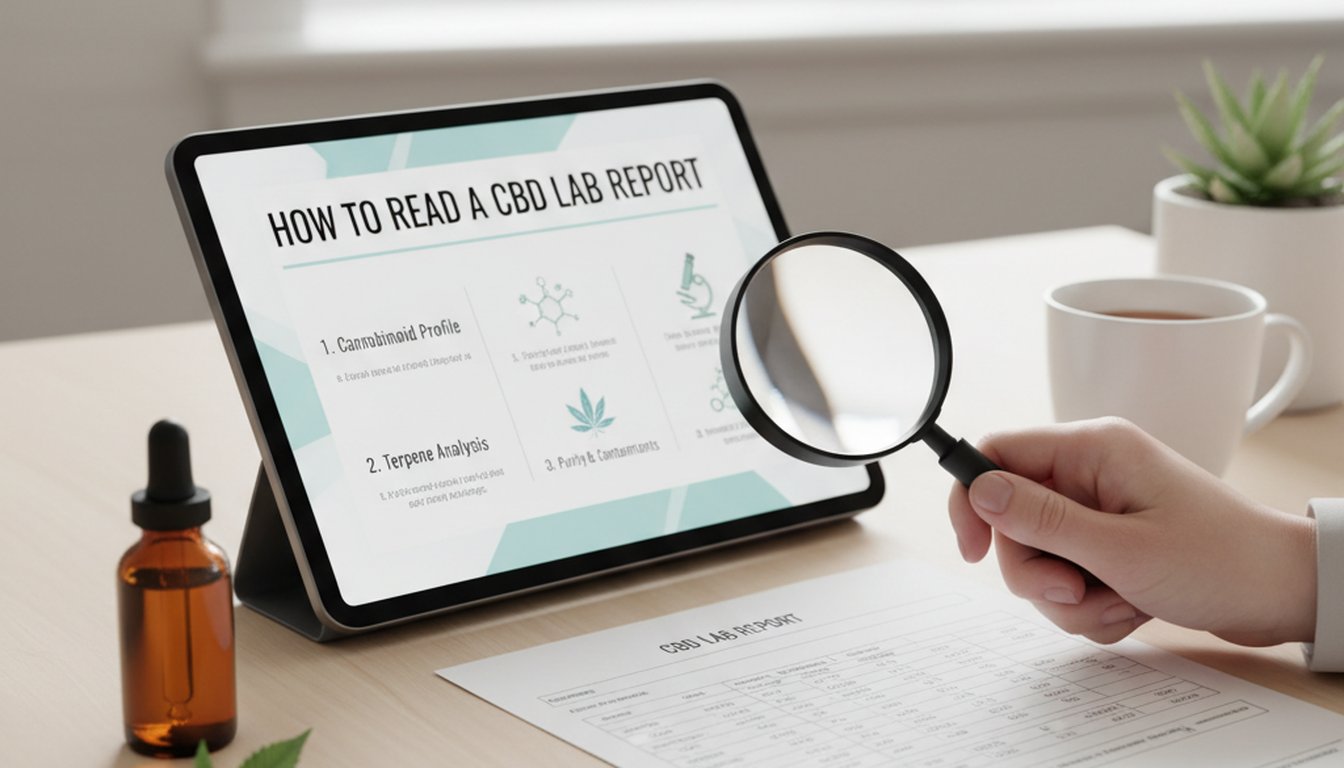
Alright, let’s dive into the nitty-gritty. Here’s what you need to pay attention to when you learn how to read a CBD lab report:
1. Cannabinoid Profile: Meet the Crew
This section is where you’ll find a list of all the cannabinoids present in the product, like CBD, THC, CBG, CBN, and so on. Each cannabinoid has its own potential benefits. Understanding their presence and quantities helps you choose a product that aligns with your wellness goals.
The percentage of each cannabinoid is listed, and it’s how you determine the *potency* of the product. For example, if a lab report indicates 15% CBD, that signifies that the product is made up of 15% CBD and therefore has more potency.
Here’s where it gets practical.
Personally, I like to look for products with a decent amount of CBD and other beneficial cannabinoids like CBG or CBN, depending on what I’m looking for (relaxation vs. focus, for example).
2. Potency: How Strong Is This Stuff?
Potency refers to the amount of each cannabinoid in the product, usually measured in milligrams (mg) per serving or per container. This is *super* important for figuring out your dosage. If you’re new to CBD, start low and go slow! Don’t jump into the deep end with a super-potent product right away.
For example, if a tincture contains 1000mg of CBD in a 30ml bottle, that means each milliliter contains about 33mg of CBD. A full dropper might be 1ml, so you’d be getting approximately 33mg per dropper. This information is crucial when learning how to read a CBD lab report so you know how much you’re intaking.
3. Contaminant Testing: The Not-So-Fun Part
This is where the lab checks for things you *definitely* don’t want in your CBD, like:
Honestly, it’s a tiny tweak—with a steady payoff.
- Heavy metals: Lead, arsenic, mercury, etc. These can be harmful even in small amounts.
- Pesticides: Chemicals used in farming that can be toxic.
- Residual solvents: Chemicals used in the extraction process (if applicable).
- Microbial contaminants: Bacteria, mold, and yeast.
The lab report should clearly state whether these contaminants were detected and, if so, whether they’re within acceptable limits. Ideally, you want to see “ND” (Not Detected) or results well below the legal limits. Seriously, don’t mess around with this stuff. Your health is worth more than saving a few bucks on a questionable CBD product.
4. Terpenes: The Aromatic Enhancers
Terpenes are aromatic compounds found in cannabis and other plants. They contribute to the plant’s smell and flavor and may also have therapeutic effects. While not always included in every lab report, checking the terpene profile can give you a better sense of the product’s potential effects.
For example, a product high in myrcene might be more relaxing, while one high in limonene might be more uplifting.
Where to Find These Elusive Reports
Most reputable CBD companies will make their lab reports readily available on their website, usually on the product page or in a dedicated “Lab Results” section. If you can’t find it, that’s a red flag! Don’t hesitate to contact the company and ask for it.
A company that’s transparent about its testing is a company you can trust. Remember that asking for transparency is part of knowing how to read a CBD lab report.
Spotting Red Flags: What to Watch Out For
Okay, so you’ve got the lab report in front of you. Here are a few things that should make you raise an eyebrow:
- Missing lab reports: Obvious, but worth repeating. No lab report = no sale.
- Inconsistent results: If the potency listed on the product label doesn’t match the lab report, something’s fishy.
- High levels of contaminants: Anything above the legal limit is a no-go.
- Fake or outdated reports: Make sure the report is recent and from a reputable third-party lab. Look for a lab name you can actually Google and verify.
- A vague or incomplete report: A lack of detail can mean the product isn’t legitimate.
From Confusion to Confidence: My CBD Journey
Honestly, learning how to read a CBD lab report has been a game-changer for me. I no longer feel like I’m blindly trusting companies. I can actually *see* what’s in the product and make informed decisions about what I’m putting in my body. It’s empowering!
And it’s something everyone should do, especially in a market that’s still relatively unregulated.
I remember one time, I bought a CBD oil from a company I hadn’t used before. The lab report looked good at first glance, but then I noticed the pesticide levels were slightly above the legal limit. I immediately contacted the company and requested a refund.
They were surprisingly uncooperative, which only solidified my decision to never buy from them again. It’s because I know how to read a CBD lab report that I was able to avoid intaking something I shouldn’t!
The Future of CBD Testing
The industry is rapidly evolving. We are seeing blockchain being used to track CBD from seed to shelf, which is incredible. The hope is for standardization across all labs and even more stringent testing requirements.
Imagine being able to scan a QR code and see the entire history of your CBD product – from the farm where it was grown to the lab where it was tested. That’s the future I’m hoping for!
For now, equip yourself with the knowledge to decode those lab reports. Your health (and your wallet) will thank you. You can even start teaching others how to read a CBD lab report!
Final Thoughts
So there you have it. It might seem intimidating at first, but learning how to read a CBD lab report is totally doable. You just need to know what to look for and where to find it. And remember, when in doubt, ask questions!
A reputable company will be happy to provide you with the information you need to make an informed decision. Now go forth and become a savvy CBD shopper!