Estimated Reading Time: 6 minutes
EEer stared at the back of a CBD product and felt like you were reading another language? I have. More times than I care to admit. It’s a jungle of milligrams, percentages, and terms that sound like they belong in a chemistry lab, not my wellness routine.
But understanding those labels, digging into the cbd nutrition facts, is super important if you want to make informed choices about what you’re putting in your body.
Why Bother with CBD Nutrition Facts, Anyway?
Table of Contents
- Why Bother with CBD Nutrition Facts, Anyway?
- Breaking Down the CBD Nutrition Label: A Friendly Guide
- CBD Content (mg)
- THC Content (%)
- Other Cannabinoids
- Ingredients List
- Serving Size
- Lab Results (Certificate of Analysis – COA)
- Real-Life Examples: CBD Nutrition Facts in Action
- Common Misconceptions About CBD Nutrition
- The Future of CBD Nutrition Facts
Seriously, why not just pop a CBD gummy and hope for the best? Well, for starters, the CBD market is still a bit like the Wild West. Not all products are created equal. Some might contain way less CBD than advertised, while others could have unwanted additives or contaminants.
By understanding the cbd nutrition facts, you become your own quality control. You’re not just trusting a label; you’re verifying it.
Think of it like this: you wouldn’t buy a protein bar without checking the protein and sugar content, right? CBD is the same. Knowing the cbd nutrition facts helps you tailor your dosage, avoid potential allergens, and ensure you’re getting a safe and effective product.
Plus, it gives you a better understanding of how CBD interacts with your body. I’ve definitely noticed a difference between full-spectrum oils and isolates, and that’s all thanks to paying attention to what’s actually *in* the product.
Breaking Down the CBD Nutrition Label: A Friendly Guide
Okay, let’s dive into the nitty-gritty. Here’s what you’ll typically find on a CBD product label, and what it all means:
Here’s where it gets practical.
CBD Content (mg)
This is the big one. It tells you how much CBD is in the entire product and, often, per serving. For example, a bottle might say “300mg CBD” and have 30 servings. That means each serving contains 10mg of CBD. This is *crucial* for figuring out your ideal dosage. Remember, everyone reacts differently.
I started with a low dose and gradually increased it until I found what worked for me. Listen to your body!
THC Content (%)
This is another key factor, especially if you’re concerned about psychoactive effects. Legally, CBD products must contain less than 0.3% THC (tetrahydrocannabinol, the psychoactive compound in cannabis).
Anyway, here’s what actually helped.
Full-spectrum CBD products will have trace amounts of THC, while broad-spectrum and isolate products should have none. I personally prefer broad-spectrum because I like the potential benefits of other cannabinoids without the THC.
Other Cannabinoids
Beyond CBD and THC, you might see other cannabinoids listed, such as CBG (cannabigerol), CBN (cannabinol), and CBC (cannabichromene). These compounds also have potential health benefits and can work synergistically with CBD (the “entourage effect”).
The cbd nutrition facts sometimes break these down, but not always. If they don’t, you might want to check the company’s website for a more detailed analysis. I love seeing CBG in my CBD oil for its added anti-inflammatory properties.
Ingredients List
Here’s where it feels real for me.
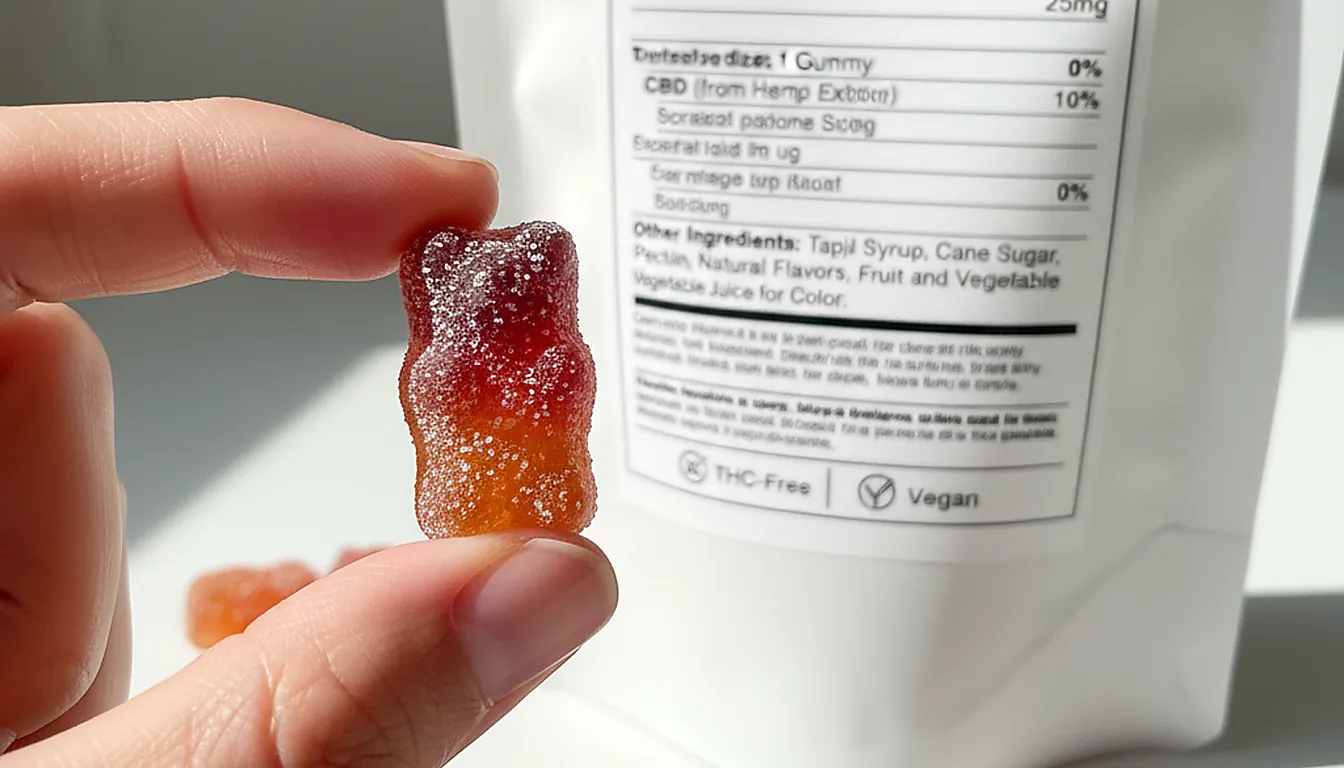
Don’t skip this! The ingredients list reveals everything else that’s in the product, including carrier oils (like MCT oil or hemp seed oil), flavorings, and any additives. Look for natural, recognizable ingredients and avoid products with artificial colors, flavors, or preservatives.
I once bought a CBD tincture that tasted suspiciously like bubblegum… the ingredient list confirmed my suspicions. Lesson learned!
Serving Size
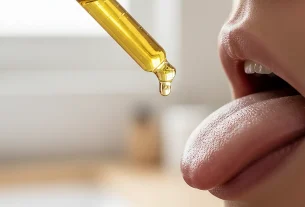
This might seem obvious, but pay attention to the serving size. It’s easy to accidentally take more or less than intended, which can affect the effects of the CBD. If you’re using a tincture, the serving size is usually measured in drops. For gummies or capsules, it’s simply one or two pieces.
Always start with the recommended serving size and adjust as needed.
Lab Results (Certificate of Analysis – COA)
This is the gold standard for verifying the cbd nutrition facts. A COA is a report from a third-party lab that tests the product for CBD and THC content, as well as contaminants like heavy metals, pesticides, and solvents.
Reputable CBD companies will make their COAs easily accessible on their website or by scanning a QR code on the product label. If you can’t find a COA, that’s a major red flag! I always check the COA before buying any CBD product; it’s non-negotiable for me.
Real-Life Examples: CBD Nutrition Facts in Action
Let me share a couple of stories to illustrate why understanding cbd nutrition facts is so important:
Case Study 1: My Friend’s Allergic Reaction
A friend of mine, Sarah, bought a CBD lotion for her eczema. She didn’t check the ingredients list and ended up having a nasty allergic reaction. Turns out, the lotion contained lavender oil, which she’s allergic to. If she had taken a moment to read the cbd nutrition facts, she could have avoided a lot of discomfort.
Case Study 2: The Under-Dosed Gummies
Another friend, Mark, was complaining that CBD gummies weren’t working for him. When I looked at the label, I noticed that each gummy only contained 5mg of CBD. That’s a very low dose, especially for someone his size. He switched to a product with 25mg per gummy, and his anxiety improved significantly.
The cbd nutrition facts made all the difference.
Common Misconceptions About CBD Nutrition
There are a lot of myths floating around about CBD, so let’s clear up a few:
Misconception 1: More CBD is always better. Not necessarily. While CBD is generally considered safe, taking too much can lead to side effects like drowsiness or dry mouth. It’s best to start low and go slow, regardless of the cbd nutrition facts on the label, you can always slowly increase the dosage.
Misconception 2: All CBD products are the same. Absolutely not. The quality, potency, and ingredients can vary widely. Always do your research and choose reputable brands that provide transparent cbd nutrition facts and third-party lab testing.
Misconception 3: CBD is a miracle cure. While CBD has shown promise for various health conditions, it’s not a magic bullet. It’s important to manage your expectations and use CBD as part of a holistic wellness approach that includes a healthy diet, exercise, and stress management.
The Future of CBD Nutrition Facts
As the CBD industry matures, I expect to see even more transparency and standardization in labeling. The FDA is currently working on regulations for CBD products, which will likely include stricter requirements for cbd nutrition facts labeling and third-party testing.
This will make it easier for consumers to make informed choices and ensure they’re getting safe and effective products. I’m really looking forward to seeing those changes. For now, being informed about the cbd nutrition facts is the best weapon we can have.
So, the next time you’re shopping for CBD, don’t be intimidated by the label. Take a few minutes to understand the cbd nutrition facts, check the COA, and choose a product that’s right for you. Your body will thank you for it!
Here’s to informed choices and a healthier you!